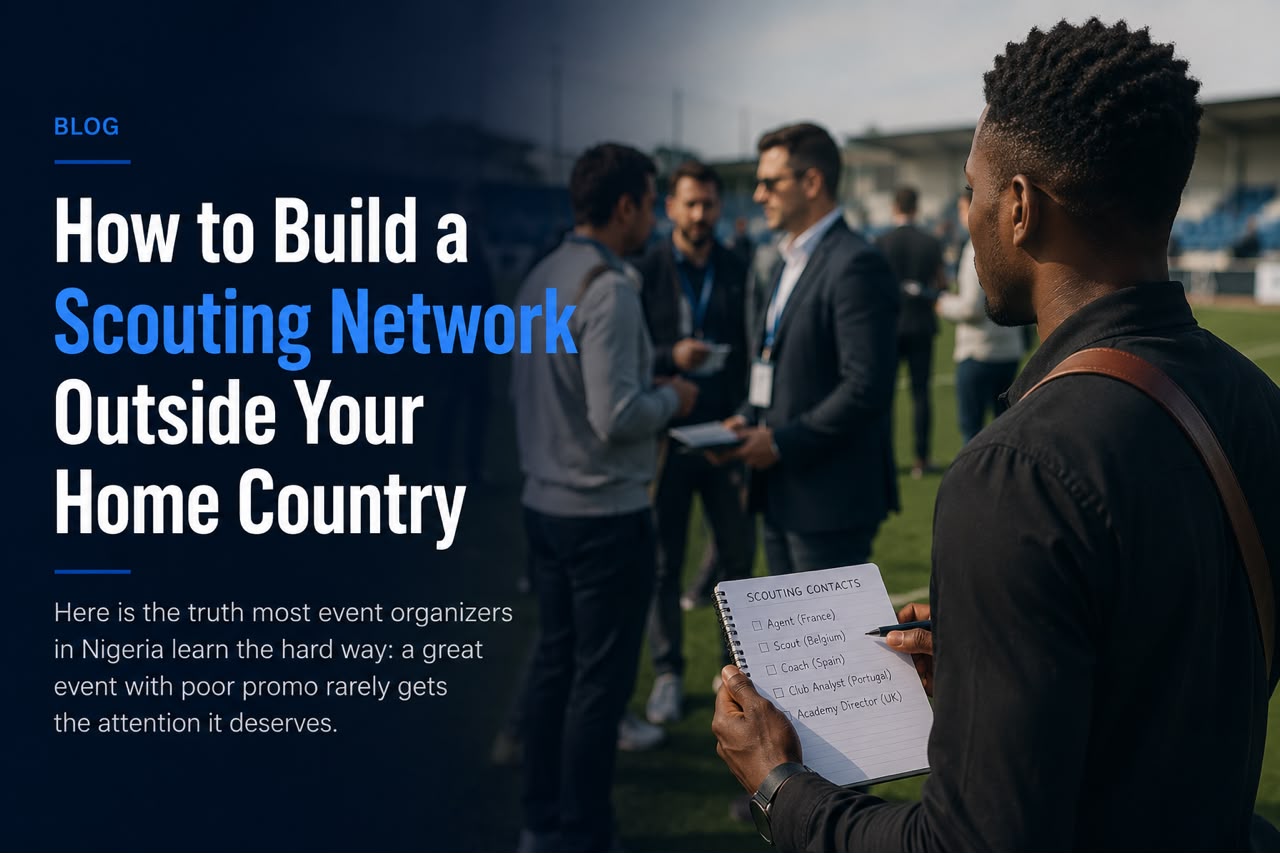
How to Build a Scouting Network Outside Your Home Country
April 22, 2026 • 104 views
How to Build an International Scouting Network That Actually Finds Players
A single scout, however sharp, can realistically follow three or four leagues in real depth across a season. There are well over 200 professional and semi-professional football associations worldwide. That gap between what one person can watch and what's actually out there is the entire reason scouting networks exist. The network finds the player. Not any one scout's eye.
The old way to build one took a decade: a personal address book, filled in trip by trip, contact by contact. That groundwork still matters in 2026, it's just no longer the only way in. Local relationships, video, and digital platforms now work together, and the clubs and agencies finding players early are the ones combining all three, not leaning on just one.
Start With a Brief, Not a Wishlist
A network built to find "good players" ends up collecting names nobody signs. A network built around a specific brief produces reports that someone can actually act on. Before reaching out to a single contact, get clear on:
- The role, not just the position. "Winger" tells a scout almost nothing. "Inverted winger who can play as an auxiliary striker in transition" tells them exactly what to look for.
- The system fit. A player who thrives in a low block can be the wrong signing for a team that presses high. Scouts need your playing model, not just your position of need.
- The bracket. Age range, contract situation, and valuation ceiling. Without this, contacts waste time flagging players you were never realistically signing.
Build Local Eyes Before You Build Reach
No platform replaces someone who watches a league every single week. The fastest way into a new market isn't flying a scout in twice a season; it's finding someone already inside the game there.
- Academy staff, retired players, and local journalists usually know who's turning heads in a league long before that player has any footprint online.
- Retainers beat one-off tips. A finder's fee for a single lead rarely produces a second one. A small, ongoing retainer for a local contact tends to produce a steady flow of information instead of a single lucky hit.
- Trust is built on follow-through. Local contacts who see a club actually act on a tip, arrange a trial, or reply to a report are the ones who send their best information first next time. Contacts who get ignored stop calling.
Let Data and Video Do the First Pass
Analytics and video widen the funnel before anyone has to travel. They don't replace the judgment call at the end.
- Standardize what gets scored. If one contact is grading on "potential" and another on end product, reports from different regions aren't actually comparable. A shared, simple scoring template is what makes a network's output usable at all.
- Full matches over highlight reels. A highlight reel shows a player's best ten seconds. A full match shows decision-making and work rate when the game isn't going their way, which is what actually predicts whether they hold up at a higher level.
Plug Into a Digital Network for the Regions You Can't Reach Yet
This is the part that's genuinely different from ten years ago. A traditional network is geographically limited to wherever a club has already built relationships, which is exactly why deep talent pools in entire regions go under-scouted for years. Not because the players aren't there. Because nobody's network reaches them yet.
This is the gap platforms like FutbolConect are built to close. Verified player profiles carry match footage and stats up front, so a scout can do a first-pass evaluation on a player in a country they've never had contact with. Direct connection between players, coaches, scouts, and clubs means a club doesn't need an existing relationship with an agent or academy to start a conversation. For leagues that rarely get international attention, West Africa is a good example of the difference between waiting for a player to be flagged by someone already in your circle and being able to find the exact profile you need yourself.
Still Show Up in Person
Digital reach gets you the shortlist. It doesn't close the deal. Trials, local tournaments, and academy showcases are still where a club confirms what the footage suggested about how a player handles pressure, moves without the ball, and reacts when things aren't going well. It's also where a club meets the people around the player: family, current club, agent, face to face, before any offer is on the table.
Where International Scouting Networks Actually Fall Apart
- No brief. Contacts sending reports on whatever looks talented, instead of what the club can actually use.
- One-off relationships. A single good tip with no ongoing contact, instead of a retained local presence.
- Highlight-reel decisions. Shortlisting or worse, offering off ninety seconds of a player's best moments.
- Paperwork left too late. Work permits, international clearance, and third-party ownership rules can kill a deal that was scouted perfectly. Get the eligibility picture early, not after terms are agreed.
A Scouting Network Checklist
- A written brief role, system fit, age, and valuation range before scouting starts
- At least one trusted local contact per target region, ideally on retainer
- A shared scoring template that every contact uses, so reports are comparable
- Full-match footage is reviewed before any player is shortlisted
- A digital platform covering the regions you don't have contacts in yet
- Budget and time set aside for an in-person trial before any offer goes out
FAQ
How many contacts do you actually need for a "real" network? Fewer than most people think. A handful of reliable contacts, each covering a region well, produces more usable signings than a long list of people you can't really vouch for.
Do you have to travel personally to scout internationally? No. Combine local contacts, video, and a digital platform to cover ground and save personal travel for players who are already close to a decision.
What's the single biggest mistake first-time international scouts make? Scouting without a brief. Without a clear role and profile to search for, a network just produces a pile of names interesting, but nobody ends up signing any of them.
Finding players early has always come down to reach how many leagues you can actually see, and how fast you hear about the ones you can't. On FutbolConect, that reach is built in: verified profiles, match footage, and direct connection between players, coaches, scouts, and clubs across borders, so a network that would normally take a decade to build starts working from day one.